

Should I Cover My AC Unit in the Winter in St. Louis?
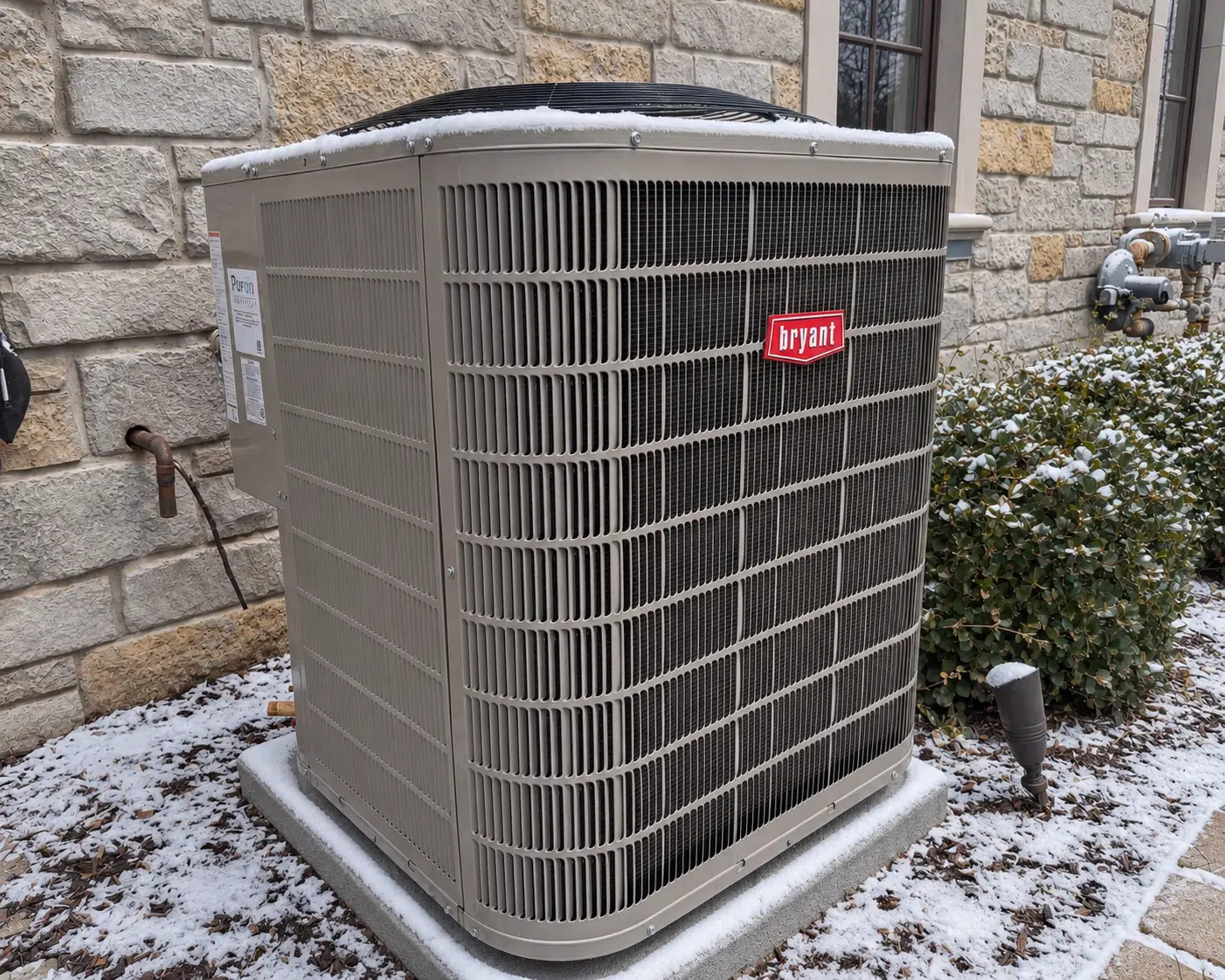
Most outdoor central AC units do not need a cover in the winter. They are designed for outdoor weather, and wrapping the entire unit can introduce problems that a cover is supposed to prevent. Bryant’s homeowner guidance says modern AC units are built to withstand the elements and do not require covering.
At Superior Service, we recommend keeping your outdoor equipment clear and following its maintenance instructions, instead of enclosing it in a plastic tarp or tight winter wrap.
The important distinction is the kind of equipment and protection involved. A full storage cover is different from a model-approved debris guard. A heat pump that heats your house is also different from a cooling-only air conditioner that is idle for the season.
This guide focuses on outdoor units of central systems. Window air conditioners have different storage and weather-sealing instructions.
For St. Louis homeowners wondering whether to cover the unit outside, here is how to make that decision.
First, Make Sure Your Outdoor Unit Is Not a Heat Pump
Before doing any winter preparation, identify what you have.
A heat pump can provide both heating and cooling, so its outdoor unit may need to run throughout winter. Having a furnace does not rule out a heat pump: a dual-fuel system pairs the two. Bryant describes this arrangement in its heating guidance.
Do not put a winter storage cover over a heat pump that serves your home. It needs outdoor airflow to collect heat. A homeowner guide hosted by the U.S. Department of Energy specifically advises against covering heat pumps during winter.
If you are unsure, check the model information or ask us to identify the equipment. Do not assume the outdoor unit is finished working simply because the thermostat is set to Heat. For the same reason, do not shut off its power for the season without checking the system’s instructions.
Your Air Conditioner Is Designed to Stay Outside
It makes sense to protect outdoor belongings before winter. You bring in cushions, store garden equipment, and cover certain items.
An outdoor central air conditioner has different requirements.
Bryant directly answers the winter-cover question in its outdoor AC care guidance:
“Modern AC units are built to withstand outdoor elements and do not require covering.”
A cold forecast alone is therefore not a reason to wrap the cabinet. We recommend looking at the unit’s actual location and condition before deciding it needs additional protection.
That does not mean every storm-related hazard can be ignored. If you are concerned about a branch above the unit, repeated roof runoff, or damage you can already see, bring that specific concern to your technician.
Why a Full AC Cover Can Cause Problems
The main concern is a cover that encloses the cabinet and limits ventilation, particularly heavy plastic or a tarp.
Moisture Can Become Trapped
Heavy plastic and tarps can trap moisture around equipment. A Bryant regional dealer resource warns that this can put moisture where it may damage electrical components.
That is why we would avoid the assumption that tighter coverage always provides better protection. If you are considering an accessory, ask whether it is appropriate for your exact equipment.
Covered Spaces May Provide Shelter for Pests
Our concern with enclosing the cabinet is that it can create sheltered space where small animals may nest. This does not mean every covered AC will develop an infestation.
Bryant’s maintenance guidance identifies a related winter problem: mice can chew an outdoor air conditioner’s wiring. It recommends keeping the surrounding area clear and checking for signs of rodent damage.
Leaving the unit uncovered does not make it pest-proof, either. Our recommendation is to keep the equipment visible and accessible so unusual debris or damage is easier to notice.
If you see nesting material or damaged wiring, arrange an inspection. Do not reach into the cabinet or attempt an electrical repair yourself.
A Forgotten Cover Can Interfere With Operation
An outdoor AC unit releases heat through its condenser coil with help from a fan. It needs airflow to do that job.
A storage cover left in place can obstruct that airflow when someone switches the system back to cooling. A tarp that seemed convenient in November can become easy to forget by the time warmer weather returns.
Remove any winter storage cover before operating the air conditioner. That keeps storage protection from obstructing the outdoor unit’s airflow when it runs.
For a heat pump, waiting until spring would be too late because the outdoor unit may be needed for heating.
What About Covering Only the Top of the AC Unit?
A top-only guard for falling debris on an idle AC differs from a full wrap. Bryant’s regional dealer guidance recognizes that option and recommends selecting an accessory for the specific model.
It is still not a reason for every homeowner to buy a cover.
Before adding anything, ask:
- Is there a specific debris problem at this location?
- Does the manufacturer allow this accessory on my model?
- Can moisture escape, and will required clearances remain open?
- Does it need to be removed before the equipment operates?
We would not recommend improvising a cover from a tarp, a sheet of plywood, or loose weights without having the setup evaluated. A product described as “breathable” is not automatically appropriate for every system.
How to Protect Your Outdoor HVAC Equipment This Winter
You can give the unit useful attention without enclosing it. We recommend a short walkthrough before winter and another look after storms.
Clear the Surrounding Area
Move leaf piles, loose yard debris, and stored items away from the equipment. Keep access available for service, and follow the clearance requirements for your model.
Bryant recommends keeping outdoor heat pumps clear of leaves, grass, snow, and other obstructions so air can move around the coil. That matters throughout the heating season.
Avoid piling shoveled snow against the cabinet. If debris is caught inside the unit rather than lying around it, leave removal to a professional.
Look Above the Unit
Check whether a gutter or roof edge directs water onto the equipment. If you have repeatedly noticed runoff freezing around it, mention that pattern when scheduling service.
The DOE-hosted heat-pump guide distinguishes between wrapping equipment and protecting it from excessive roof runoff or snow. A properly designed shield or installation change may be appropriate, but it needs to preserve airflow and service access.
We recommend addressing the actual source of the problem before adding a makeshift shelter.
Recognize Normal Frost and Abnormal Ice on a Heat Pump
Light frost can form on an outdoor heat-pump coil, and the system uses a defrost cycle to clear it. Bryant distinguishes that normal process from a unit encased in persistent, heavy ice.
A cover is not a fix for a defrost problem.
If ice remains or heating performance declines, schedule heat pump repair. Avoid chipping ice from the coil or trying to diagnose internal components yourself.
Plan for Spring Maintenance
An uncovered air conditioner still needs maintenance.
Bryant recommends professional AC maintenance at least annually, ideally before cooling season. An inspection can identify electrical concerns, debris, and other developing problems before you depend on the system again.
Scheduling air conditioner maintenance also gives us a chance to answer questions about your particular installation. If you noticed an issue over winter, bring a photo or describe when it occurred.
What If You Already Covered Your AC?
You do not need to assume the equipment has been damaged.
Start by identifying whether you have a cooling-only AC or a heat pump. Then review the cover and the equipment instructions.
If you used a full plastic wrap on an idle AC, ask whether it should be removed. Check for visible moisture, accumulated debris, or signs of pests without taking the cabinet apart.
If the equipment is a heat pump that should be heating your home, address the blocked airflow promptly. Contact us if you cannot safely remove the obstruction with the equipment stopped.
Before any cooling operation, make sure removable storage protection is off so the outdoor unit has an open path for airflow.
Frequently Asked Questions
Should I Cover My AC Unit in the Winter?
Most outdoor central AC units do not need winter covering. Bryant says modern units are built for outdoor conditions. Follow your model’s instructions, and avoid wrapping a heat pump that needs to operate for heating.
Can an AC Cover Trap Moisture?
Yes. Heavy plastic or a tarp can trap moisture around outdoor equipment. Follow your model’s instructions before adding any accessory.
Do AC Covers Attract Mice?
A cover can provide sheltered space where mice may nest, but it does not guarantee an infestation. Mice can damage uncovered equipment too. Bryant identifies rodent-chewed outdoor AC wiring as a winter maintenance concern.
Can I Cover Just the Top of My Air Conditioner?
Sometimes, if the model permits it, and falling debris is a concern. Ask about an appropriate accessory. A heat pump that operates for heating needs unobstructed airflow.
Should I Cover My Heat Pump During Snow?
No. Keep it open to airflow and clear surrounding obstructions according to its instructions. Normal frost should be handled by defrost operation. Persistent heavy ice or declining heating performance calls for inspection, not a cover.
Winter AC Care for St. Louis Homeowners
Our general recommendation is straightforward: leave an ordinary outdoor central AC unit uncovered unless your equipment instructions or a specific installation concern call for different protection.
Spend that effort checking the surrounding area, watching for damage, and arranging appropriate maintenance.
At Superior Service, we provide air conditioning services in St. Louis, along with heat-pump troubleshooting and repair. If you are unsure whether the unit outside your home needs winter attention, we can help you identify the equipment and decide what care makes sense.
Contact Superior Service with your outdoor-unit questions so you can prepare for winter with guidance that fits your system.