
Why Is My Water Bill So High in Wentzville, MO?

A higher water bill can come from increased water use, an unnoticed plumbing leak, or changes in the charges on your statement. The first step is to find out whether you used more water or simply owe more money. Those are different problems, and they call for different next steps.
You open your utility bill and see a total that looks unusually high. Nobody has moved in. You have not filled a swimming pool. As far as you know, your household is doing everything the same way it did last month.
Before blaming longer showers or assuming a pipe has broken underground, start with the information already available to you. A few comparisons can help you decide whether to contact your utility provider, check an overlooked fixture, or schedule plumbing service.
Here is how we recommend approaching an unexpected water-bill increase in your Wentzville home.
Why Is My Water Bill So High When Nothing Has Changed?
Not every change in water use is easy to notice. A toilet can refill between flushes, and an irrigation system can waste water while running early in the morning. Your daily routine may be unchanged while equipment operates differently in the background.
However, the total amount due is not enough to establish that you have a leak.
For City of Wentzville utility customers, water charges include a monthly base fee and metered usage. Check the provider named on your statement before applying the city-specific billing information in this guide.
Compare the water-consumption figure with previous statements, then review the individual charges. Utility bills can include fixed fees and usage-based charges, so an increase in the total does not necessarily mean that more water passed through your meter.
We recommend keeping your current bill beside the previous bill as you investigate. Write down what changed instead of relying on how expensive the total feels.
Compare Daily Use, Not Just Monthly Totals
Check the number of days covered by each meter-reading period. Comparing daily use gives you a more consistent starting point when the periods differ.
For a hypothetical example, consider these two readings:
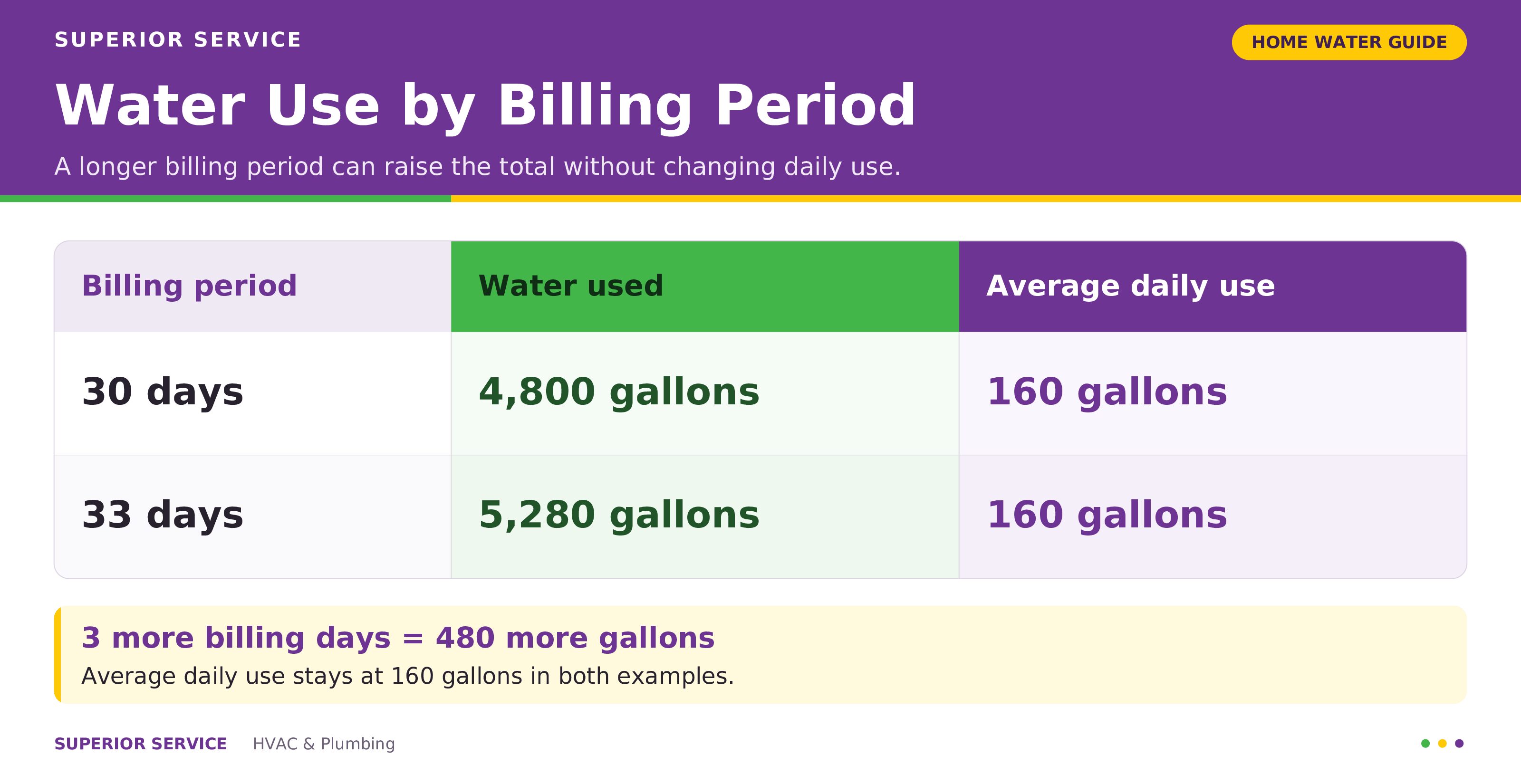
The second period includes more gallons, but the daily average is identical.
Now imagine the second period showed 8,250 gallons over 33 days. That would equal 250 gallons per day, a genuine increase over the earlier daily average.
The calculation is straightforward:
Water used ÷ days in the reading period = average daily use
These figures are examples, not an estimate of typical Wentzville household consumption. The useful comparison is your home against its own history, with household changes taken into account.
Use Wentzville’s Water-Usage Tools Before Guessing
City water customers can use EyeOnWater, a free online portal and mobile app for reviewing consumption and setting up leak notifications.
We recommend looking for a pattern rather than checking only the monthly total.
Did usage increase on one particular day? Does the increase coincide with a watering schedule? Is water being recorded throughout periods when you expected the house to be inactive?
Save a screenshot of anything you cannot explain and note what was happening at home at that time. A date and a usage pattern give you a specific question to investigate.
A Leak Alert Is Not a Diagnosis
EyeOnWater’s leak alerts look for flow above a selected threshold during 24 consecutive hours. The system cannot determine whether that water use was intentional. Intermittent leaks may not trigger an alert, and notifications depend on meter communication.
That means two things: an alert deserves investigation, but the absence of an alert does not prove your plumbing is leak-free.
Use the dashboard as an early-warning tool, not as a replacement for checking the house.
Check Whether Water Is Being Used When Everything Should Be Off
A useful next step is a no-use meter check. The EPA recommends comparing your meter reading before and after a two-hour period when no water is being used. A changed reading suggests a possible leak.
For a meter you can safely read, approach the check this way:
- Choose a period without water use. Avoid showers, toilet flushing, laundry, dishwashing, and irrigation. Account for equipment that may use water automatically.
- Record the starting reading and time. A clear photo can help prevent a transcription mistake.
- Check again after two hours. If the reading increased, confirm whether any appliance or fixture operated before treating the result as unexplained use.
Do not open a locked enclosure, enter a meter pit, or operate unfamiliar utility valves. Ask your provider for assistance when the meter is not safely accessible.
This check tells you whether water passed through the meter during that period. It does not identify the source, and one quiet interval does not rule out a problem that occurs intermittently.
Where the Extra Water Could Be Going
Once you establish that consumption really has increased, check the places where water can escape without attracting much attention.
A Toilet That Refills Without Being Flushed
A toilet does not have to run loudly all day to waste water. Water can escape from the tank, lower its level, and cause the fill valve to open again. A worn flapper or canister seal, an overflow problem, or a binding handle mechanism can contribute to this behavior.
Check bathrooms that are used less often, too. Listen after the toilet has finished refilling and nobody has flushed it again.
For a conventional tank toilet, the EPA suggests adding a little food coloring to the tank and waiting 10 minutes without flushing. Color appearing in the bowl indicates a tank-to-bowl leak. Flush afterward to help prevent staining.
Finding this problem does not automatically mean replacing the entire toilet. Identify the cause before choosing a repair.
Faucets and Showerheads That Never Fully Stop Dripping
A drip that disappears directly into a drain can be easy to overlook. Include bathroom faucets, tub spouts, showerheads, and utility sinks in your check.
The EPA identifies dripping faucets and showerheads among common household leaks. Even when there is no puddle to clean up, the wasted water still matters.
Make a note of which fixture leaks and whether it continues after normal use has ended. Avoid forcing handles tighter or taking components apart without knowing how to isolate the water supply safely.
Irrigation Problems You Do Not See From Inside
An irrigation system can waste water through broken heads, leaking connections, or incorrect programming. Water pooling between watering cycles can also suggest an underground irrigation leak.
Review the controller’s schedule rather than assuming it still matches your intended settings. Compare the programmed watering times with your usage history.
If the system is still operating for the season, observe a normal cycle from a safe location. Look for water spraying onto pavement, an obvious broken head, or an area receiving much more water than intended.
Do not assume switching the controller off resolves every irrigation leak. A valve that does not close fully may continue allowing water through. An irrigation professional can investigate that situation.
Water-Using Equipment in the Background
Water softeners, humidifiers, washing machines, and other connected equipment can also contribute to unexplained use. For example, a softener that is not cycling correctly may waste water, while some equipment leaks can discharge into a drain instead of leaving a visible puddle.
Our recommendation is to note the equipment you have and any recent setting changes. Mention persistent running-water sounds, unusual cycling, or an increase that began after maintenance.
Do not alter unfamiliar controls just to make the usage graph drop. First establish what normal operation should look like for that equipment.
A Leak Outside the Areas You Can See
A persistently wet or soft area in the yard can be a clue to a leaking service line or irrigation piping. Water may soak into the ground rather than create an obvious stream.
Treat that observation as information for a professional, not proof of exactly where a pipe has failed. Note the location and when you first noticed it rather than starting to dig.
Why Winter Water Use Matters in Wentzville
For City of Wentzville residential customers, the usage portion of sewer billing is based on average water use during November, December, January, and February.
The practical implication is that an unresolved leak during those months could influence the readings used for later sewer charges, not just the immediate water charge.
That makes fall a useful time to investigate unexplained consumption. Ask the city how a documented leak or correction would affect your particular account; do not assume an adjustment is automatic.
Repairing the plumbing problem and resolving a billing question are separate tasks. We recommend keeping records for both.
Should You Call Your Utility Provider or a Plumber?
Start with your utility provider when your main question concerns the statement itself. Ask about an unfamiliar charge, the meter-reading dates, or a consumption figure that does not appear to match your records.
A useful question is:
“Can you help me identify whether this increase came from recorded water use or from another part of the bill?”
Contact a plumber when you have evidence of a plumbing problem, such as a leaking fixture, unexplained water use during a no-use check, or persistent running-water sounds. A high bill alone should not determine which component gets replaced.
If water is actively escaping from a broken pipe, do not wait two hours to finish a meter test. Arrange urgent assistance. Use a familiar household shutoff only when you can reach and operate it safely; knowing that valve’s location in advance can help limit flooding damage.
After a Repair, Check the Usage Again
We recommend recording the repair date and comparing the usage pattern afterward.
Did the unexplained overnight consumption stop? Did the toilet stop refilling between flushes? Does the daily average move back toward the household’s previous pattern?
Keep the repair invoice, relevant photos, and any before-and-after screenshots together. These records give you something specific to discuss if you contact the utility about the affected billing period.
Also ask what follow-up makes sense. Correcting one confirmed problem is useful, but the best way to evaluate the result is to compare the readings rather than assume every source of extra use has disappeared.
Plumbing Help for Wentzville Homeowners
At Superior Service, we provide plumbing services in Wentzville, including faucet and toilet repairs, pipe repairs, and other household plumbing work.
When your bill raises a question, start with the consumption history. When that history points toward a plumbing problem, bring us what you have found.
We recommend addressing a confirmed leak rather than waiting to see whether another month’s bill is just as high. A clear record of the problem also helps keep the service conversation focused on what needs attention.
Schedule plumbing service with Superior Service in Wentzville to address leaks and unexplained water use before another billing cycle passes.