

Why Are Some Rooms Colder Than Others in Your Lake St. Louis Home?
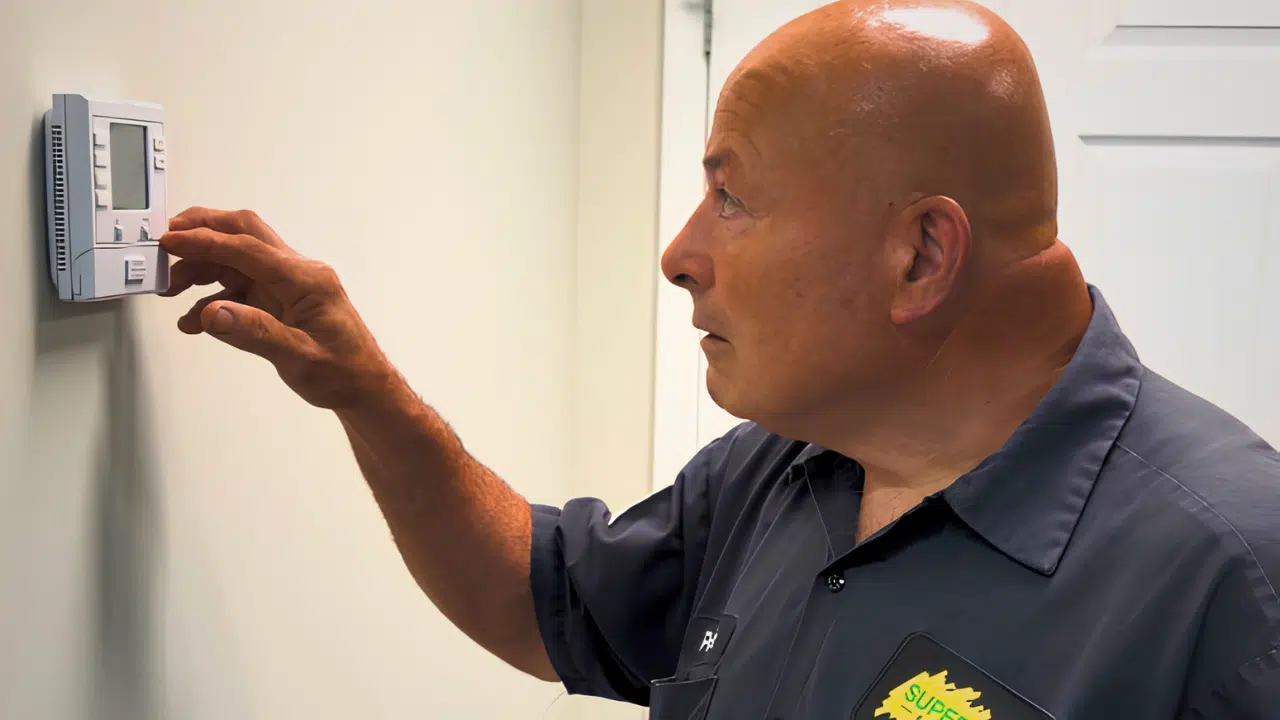
If some rooms in your Lake St. Louis home are colder than others, the problem is usually not as simple as turning up the thermostat. Uneven heating can come from restricted airflow, leaky or poorly designed ductwork, air leaks around the home, inadequate insulation, thermostat location, or an HVAC system that is not distributing heat evenly.
It is a frustrating problem because your furnace may technically be working. The living room feels comfortable, the thermostat reads 70 degrees, and then you walk into an upstairs bedroom or a room over the garage and immediately notice the difference.
Before assuming you need a new furnace, it helps to figure out where the heat is being lost or why enough heated air is not reaching the colder room.
Here are some of the most common reasons Lake St. Louis homeowners experience uneven heating and what you can do about them.
1. Start With the Simplest Question: Is Enough Air Reaching the Room?
When one room feels significantly colder than the rest of your house, start at the supply vent.
With your heating system running, compare the airflow coming from the colder room with airflow from a room that feels comfortable.
You do not need any special equipment. Simply pay attention to whether the colder room seems to receive noticeably less air.
If airflow is weak, check for simple restrictions first:
- Make sure the supply vent is fully open.
- Move furniture, rugs, curtains, or other objects that may be blocking the vent.
- Make sure return-air grilles are not covered.
- Check your furnace filter and replace it if it is dirty.
- Avoid closing multiple vents around the house in an attempt to force more heat into one room.
A dirty filter is especially worth checking because it can restrict airflow throughout the HVAC system. Your furnace needs enough air moving through it to operate properly, and restricted airflow can contribute to comfort problems and even furnace overheating.
If the filter and vents look fine but airflow is still noticeably weaker in one part of the house, the problem may be farther inside the duct system.
2. Your Ductwork May Be Losing Heated Air Before It Reaches the Room
Your furnace can produce plenty of heat and still leave certain rooms cold if that heat never makes it through the ductwork efficiently.
Leaks, disconnected sections, poorly sealed joints, damaged ducts, or poorly designed duct runs can all reduce the amount of conditioned air that reaches a room.
ENERGY STAR estimates that in a typical house, 20% to 30% of the air moving through the duct system can be lost through leaks, holes, and poorly connected ducts. Rooms that are difficult to heat or cool are one of the warning signs of poor duct performance.
That can become particularly noticeable when ductwork passes through an attic, garage, crawlspace, or another area that is much colder than the living space.
Imagine your furnace sending warm air toward a second-floor bedroom. If part of that air escapes through a poorly sealed duct connection before it reaches the vent, the furnace can be operating correctly while the bedroom still feels chilly.
This is one reason we do not like to diagnose uneven heating based on the furnace alone. The HVAC system includes the equipment that produces the heat and the distribution system that delivers it.
ENERGY STAR specifically notes that sealing and insulating ducts can help with rooms that are too cold during winter.
3. The Problem May Be the House, Not the Furnace
Sometimes a cold room is receiving enough warm air, but it is losing heat faster than the rest of the house.
This is where insulation and air sealing become important.
Gaps around windows, doors, attic penetrations, plumbing openings, recessed fixtures, rim joists, and other parts of the building envelope can allow conditioned indoor air to escape while colder outdoor air enters.
The U.S. Department of Energy explains that poor air sealing can create drafts and cold spots while making a home more expensive and difficult to keep comfortable.
That means replacing an HVAC component will not necessarily solve every cold-room problem.
Ask yourself:
Does the room feel drafty even when warm air is coming from the vent?
If so, walk around the room on a colder or windy day. Pay particular attention to:
- Windows
- Exterior doors
- Electrical outlets on outside walls
- Attic access points
- Baseboards
- Areas where additions or different sections of the house meet
- Floors above garages or other unconditioned spaces
You are not trying to conduct a full energy audit yourself. You are simply trying to determine whether the room seems to be losing heat rather than failing to receive it.
ENERGY STAR lists uneven room temperatures as a potential symptom of inadequate attic insulation, air leakage, basement or crawlspace issues, and duct problems.
That is an important distinction because the solution needs to match the cause.
4. Rooms Over Garages Can Be Especially Difficult to Keep Comfortable
A bedroom or bonus room located above a garage can behave very differently from an interior room.
An interior room may be surrounded by other conditioned spaces. A room over a garage may have a cold space directly beneath its floor and multiple exterior surfaces exposed to outdoor temperatures.
If the insulation or air sealing between the garage and living space is inadequate, the floor can feel cold and the room may lose heat more quickly.
The same principle applies to rooms above crawlspaces, rooms beneath poorly insulated attics, and rooms on the corners of a house with multiple exterior walls.
If one specific room has always been harder to heat, even when the furnace is operating well, the layout and construction of that portion of the home should be part of the investigation.
5. Your Thermostat Only Knows the Temperature Where the Thermostat Is Located
Your thermostat does not know the temperature in every room unless you havef a system specifically designed with additional sensors or zoning controls.
It measures the conditions around itself.
Suppose your thermostat is in a central hallway that warms quickly. The thermostat reaches 70 degrees and tells the heating system to stop.
Meanwhile, a bedroom at the other end of the house may still be 66 degrees.
From the furnace’s perspective, it completed the heating call. From your perspective, part of the house is still uncomfortable.
This can become more noticeable in:
- Larger homes
- Two-story homes
- Homes with finished basements
- Rooms with large windows
- Additions
- Homes with long duct runs
- Floor plans with significantly different sun exposure from one side to another
Changing the thermostat setting higher can make the warmer rooms even hotter without fixing the underlying imbalance.
Depending on the home, an HVAC technician may want to evaluate thermostat placement, system balancing, airflow, zoning possibilities, or compatible remote temperature sensors.
6. Check Whether Doors Are Affecting Air Circulation
Your HVAC system needs a path for air to move into and back out of rooms.
That matters because heating is not just about blowing warm air through a supply vent. Air also needs to make its way back toward the HVAC system through the return-air side.
If a bedroom becomes noticeably colder when its door is closed, but feels better when the door stays open, mention that when you schedule HVAC service in Lake St. Louis.
It can be a clue that air distribution or return-air movement deserves a closer look.
Rather than trying to fix the problem by leaving every door open permanently, it is better to understand why closing the room changes its comfort so much.
7. Your Furnace Could Still Be Part of the Problem
Uneven heating does not automatically mean your furnace is failing, but the heating equipment should not be ignored either.
A furnace that is struggling with airflow, blower operation, controls, or another performance issue may have difficulty distributing heat properly.
At Superior Service, our Lake St. Louis HVAC technicians can inspect the heating system and look at components such as the blower, thermostat, burners, ignition system, safety controls, airflow, and other areas that affect furnace operation.
Pay attention to whether uneven temperatures are accompanied by other symptoms, such as:
- The furnace turning on and off unusually often
- Weak airflow throughout several rooms
- Unusual furnace noises
- The system running for long periods without reaching the thermostat setting
- A noticeable increase in heating costs
- Cool or room-temperature air coming from vents
- A recent decline in comfort that was not present in previous winters
A room that has been colder than the others for 10 years points us in a different direction than a house that suddenly developed uneven heating last week.
That history is useful information.
8. Does Uneven Heating Mean Your Furnace Is Too Small?
Sometimes homeowners assume that a furnace must be undersized because certain rooms are cold.
It is possible for incorrectly sized HVAC equipment to cause comfort problems, but room-to-room temperature differences by themselves do not prove that your furnace is too small.
ENERGY STAR lists improper HVAC operation, duct problems, and inadequate insulation among the possible causes when some rooms are hotter or colder than others.
That is why we recommend diagnosing the entire comfort problem before jumping straight to replacement.
If the furnace reaches the thermostat temperature easily but one bedroom stays cold, simply installing a larger furnace may not address the actual issue.
In fact, HVAC sizing should be based on the heating and cooling requirements of the home rather than the idea that bigger equipment is automatically better.
9. Should You Close Vents in the Warm Rooms to Force Heat Into the Cold Room?
This sounds logical: close the vents in rooms that are already warm and send more heat toward the cold area.
Unfortunately, a forced-air HVAC system is not quite that simple.
Closing multiple registers changes airflow and pressure within the duct system. Depending on the system, that can create additional airflow problems rather than solving the original one.
Instead, start by making sure all vents are open and unobstructed. If the house still heats unevenly, have the airflow and duct system evaluated.
A properly balanced system may require adjustments, but those adjustments should be based on how the system is actually performing rather than randomly closing registers until one room feels better.
10. Keep Track of the Pattern Before You Schedule Service
You do not need to diagnose the problem yourself, but a few observations can make an HVAC appointment more productive.
Before calling, take note of:
Which rooms are cold?
Is it one bedroom, an entire floor, or one side of the house?
When is it worst?
Is the room especially cold overnight, during windy weather, or whenever temperatures fall significantly?
How is the airflow?
Does the colder room seem to receive roughly the same airflow as comfortable rooms?
Does opening the door help?
This can provide useful information about air circulation.
Has the problem always existed?
A long-term comfort issue may have a different cause than a sudden change.
Does the furnace seem to be operating normally?
Mention unusual cycling, noises, odors, weak airflow, or other changes.
You can even use an inexpensive indoor thermometer to compare rooms rather than relying entirely on how the rooms feel.
For example:
- Hallway near thermostat: 70°F
- Upstairs bedroom: 65°F
- Main-floor bedroom: 69°F
That gives us a much clearer picture than simply saying, “The upstairs always feels cold.”
When Should a Lake St. Louis Homeowner Call an HVAC Professional?
If opening vents, removing obstructions, and checking the air filter do not solve the problem, it is worth having the system evaluated.
This is especially true when:
- The temperature difference between rooms is significant
- Airflow is noticeably weak
- Uneven heating suddenly develops
- The furnace runs constantly
- The furnace frequently starts and stops
- Your utility bills rise unexpectedly
- Certain rooms never become comfortable
- You suspect ductwork problems
- Your heating system is older and experiencing additional problems
The goal should not be to immediately sell you a new furnace.
The goal should be to determine why your home is heating unevenly.
That may involve the furnace. It may involve the ducts. It may involve insulation or air leakage. And in some homes, more than one issue contributes to the problem.
HVAC Service in Lake St. Louis From a Local Team
Superior Service is based right here in Lake St. Louis, and we provide heating, cooling, maintenance, installation, ductwork, thermostat, and indoor air quality services for homeowners throughout the community and surrounding St. Charles County.
If rooms around your Lake St. Louis home are consistently colder than the rest of the house, we can evaluate the HVAC side of the problem and help you understand what is actually happening before you make a major decision.
We would rather find the cause than have you keep turning the thermostat higher every winter.
Schedule HVAC service with Superior Service and let us help you get more consistent comfort throughout your Lake St. Louis home.