

What Is the Best Thermostat Setting for Fall in St. Louis?
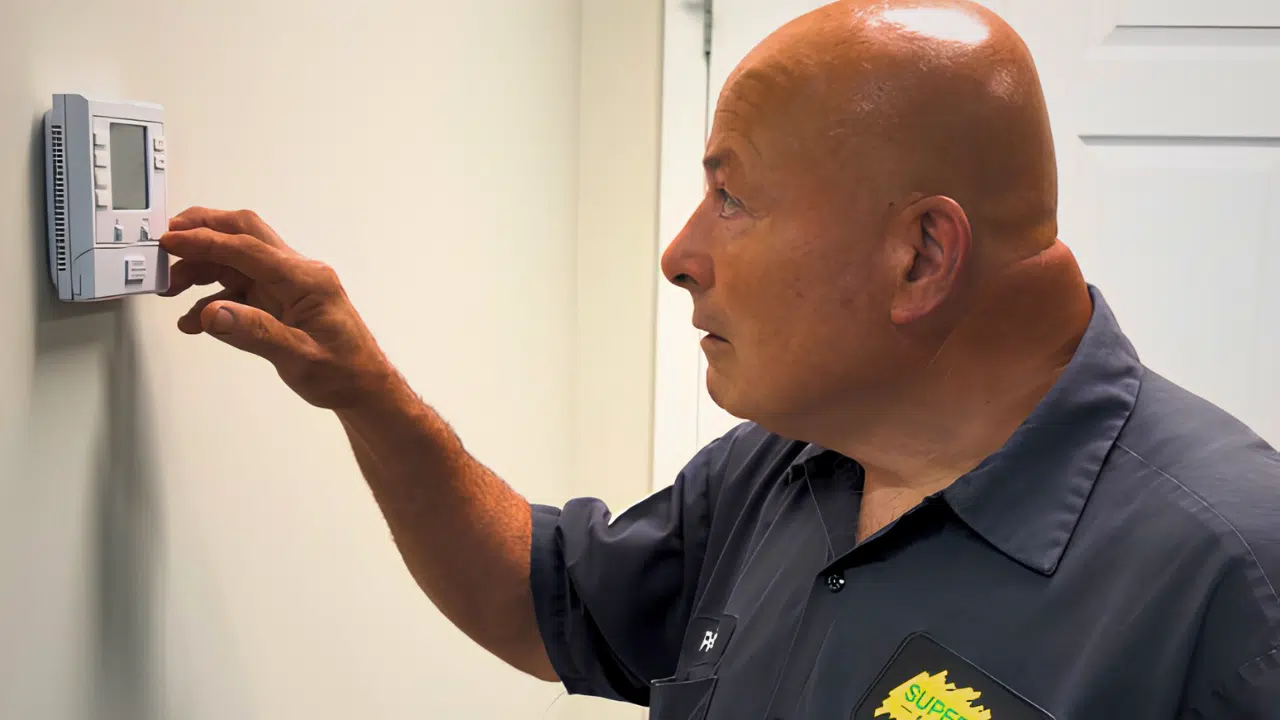
For most St. Louis homes with a furnace, 68°F is a good starting point when you are home and awake during cooler fall weather. From there, adjust the thermostat a degree or two at a time until you find a temperature that keeps your household comfortable without heating the house more than necessary.
But fall in St. Louis makes thermostat settings a little more complicated than simply picking one number and leaving it there.
An October afternoon can feel almost like summer. A cold front can arrive a few days later and leave you reaching for the heat. By November, overnight temperatures are routinely much colder.
According to the National Weather Service, St. Louis has an average October high of about 69°F and an average low around 49°F. In November, those normals fall to approximately 56°F during the day and 37°F overnight. The region’s average first freeze occurs around November 2.
That means the best fall thermostat strategy is less about finding a magical temperature and more about adjusting your home efficiently as St. Louis transitions from cooling season to heating season.
Here is how we recommend approaching it.
Is 68 Degrees the Best Thermostat Setting for Fall?
For a home using a furnace, 68°F is a practical energy-conscious starting point while you are home and awake.
Carrier recommends starting around 68°F during heating season and adjusting the temperature one or two degrees at a time based on your comfort.
That does not mean 68°F is a rule.
Some St. Louis homeowners may be perfectly comfortable at 67°F. Others may prefer 69°F, 70°F, or warmer.
Your ideal setting depends on factors such as:
- Your personal comfort
- Your home’s insulation and air sealing
- Indoor humidity
- Sun exposure
- The age and layout of the house
- How evenly your HVAC system distributes heat
- Whether you have young children, older adults, or household members with specific comfort needs
- The type of heating system you use
Instead of forcing your home to match a recommended number, think of 68°F as a starting point.
If you are cold at 68°F, raise the thermostat one degree and see how the house feels. If 68°F feels warmer than necessary, try lowering it slightly.
Small adjustments make it easier to find the balance between comfort and energy use.
What Temperature Should You Set the Thermostat at Night?
If you heat your home with a conventional furnace, nighttime can be an opportunity to reduce the thermostat setting.
You do not necessarily need your house at the exact same temperature while you are asleep as you do while sitting in the living room during the evening.
For example, a homeowner who prefers 68°F while awake might experiment with a nighttime setting around 62°F to 65°F, provided everyone in the household remains comfortable.
The exact setback is up to you.
Historically, ENERGY STAR guidance for programmable thermostats has used substantial setbacks during sleeping and away periods as an energy-saving strategy for conventional heating systems.
The important part is consistency. If you find that lowering the temperature significantly makes the house uncomfortable or causes you to repeatedly override the schedule, use a smaller setback.
A schedule you actually follow is more useful than an aggressive energy-saving schedule that you constantly change.
Heat pump owners should read the next section before using a large nighttime setback.
Heat pumps operate differently from furnaces.
Do You Need a Different Thermostat Strategy With a Heat Pump?
Yes. This is one of the most important thermostat distinctions homeowners should understand.
If your St. Louis home uses an air-source heat pump, ENERGY STAR recommends maintaining a relatively steady comfortable temperature instead of routinely making large temperature setbacks.
Why? Many heat-pump systems have supplemental electric resistance heat. If you lower the thermostat substantially and then ask the system to raise the indoor temperature several degrees quickly, the controls may activate auxiliary heat to help the home recover.
Electric resistance backup heat can use considerably more electricity than normal heat-pump operation.
The Department of Energy recommends heat-pump thermostats capable of gradually recovering from temperature setbacks to reduce unnecessary use of electric resistance heat.
So if you have a heat pump, your fall strategy might be to choose a comfortable temperature and keep it relatively steady.
For example, rather than going from 68°F to 60°F overnight and back to 68°F first thing in the morning, your particular heat-pump system may perform better with a much smaller adjustment or no setback at all.
Modern equipment and controls vary, so ask your HVAC technician how your specific heat pump and thermostat are designed to work.
What Should You Set the Thermostat to When Nobody Is Home?
For homes with a conventional furnace, lowering the heating temperature while the house is unoccupied can reduce the amount of energy needed to maintain a warmer indoor temperature.
Your schedule might look something like this:
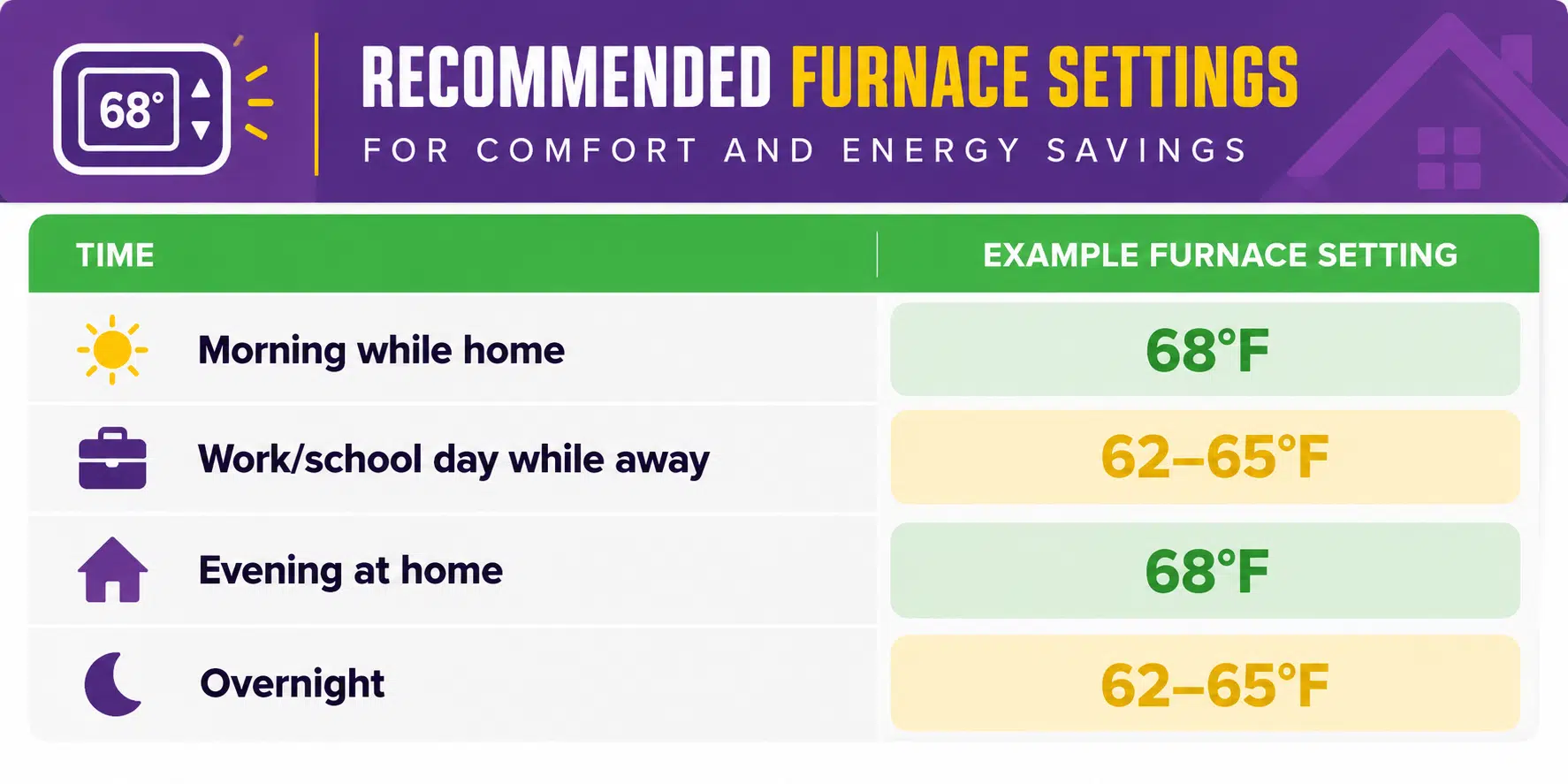
These are examples, not required settings. A household with someone working from home would obviously use a different schedule than a household that is empty from 8 a.m. until 5 p.m. This is where a programmable or smart thermostat can be especially helpful.
Rather than remembering to turn the temperature down every morning and back up every evening, you can create a schedule around when the house is actually occupied.
ENERGY STAR-certified smart thermostats can also offer features such as geofencing, occupancy awareness, and learning your temperature preferences. Some models can automatically use energy-saving settings while you are away and restore a comfortable temperature when you return.
Should You Use “Auto” Mode During a St. Louis Fall?
This is where fall gets interesting. A St. Louis October day can start chilly enough to make you think about heating and end warm enough to make you think about air conditioning.
It can be tempting to put your thermostat in Auto mode so it switches between heating and cooling without you doing anything. Whether that makes sense depends on your HVAC system and thermostat.
For many conventional furnace-and-air-conditioner systems, properly configured automatic changeover can be convenient during shoulder season. The thermostat typically requires a temperature gap between the heating and cooling setpoints so the furnace and air conditioner are not constantly fighting one another.
For example, rather than setting:
Heat: 70°F
Cool: 70°F
you might have a much wider range such as:
Heat below: 67°F
Cool above: 76°F
Then, if the house naturally stays between those temperatures, neither system has to run.
Heat pumps are different
ENERGY STAR specifically recommends keeping heat pumps in the appropriate Heat or Cool operating mode rather than Auto mode, particularly to avoid unwanted switching during unusual temperature swings.
If you are not sure how your thermostat’s Auto function interacts with your equipment, check the manufacturer’s instructions or ask your HVAC technician.
Take Advantage of Mild Fall Days
One of the easiest ways to reduce HVAC use during fall is to recognize when you do not need heating or cooling at all.
Suppose your St. Louis home is 68°F in the morning and the afternoon forecast is mild. You may not need to turn the furnace on simply because the morning feels a little cool. Sunlight, household activity, cooking, and warmer outdoor temperatures can naturally raise the indoor temperature throughout the day.
This is one reason fall thermostat settings should not be treated like winter settings. By late December, your furnace may need to maintain indoor comfort against consistently cold outdoor conditions.
In October, there may be long stretches where the outdoor temperature does much of the work for you.
The National Weather Service describes fall in the St. Louis region as a season of significant variability, with increasingly frequent cold fronts as the season progresses. The area’s average first freeze is around November 2, but freezes can arrive earlier or later.
That variability is exactly why a flexible thermostat schedule can be useful.
Don’t Constantly Change the Thermostat by Several Degrees
There is a difference between creating a deliberate thermostat schedule and constantly changing the temperature because you are temporarily uncomfortable.
If your thermostat is set to 68°F and you feel cold, setting it to 75°F will not make the furnace heat the house faster. The thermostat controls the target temperature. It does not act like an accelerator pedal.
Instead, increase the setpoint one or two degrees and give the system time to respond. If you regularly feel uncomfortable even when the thermostat says the house has reached the temperature you selected, there may be another issue worth investigating.
For example:
- One room may receive less airflow.
- The thermostat may be in a warmer area than the room you occupy.
- The home may have significant air leakage.
- Indoor humidity may be low.
- Ductwork may not distribute heat evenly.
- The furnace may not be operating correctly.
In that case, continually raising the thermostat can mask a comfort problem rather than solve it.
Why Does 68 Degrees Feel Different in Different Homes?
Two St. Louis homes can both have thermostats reading 68°F and feel completely different. Temperature is only one part of indoor comfort.
Indoor humidity matters
As outdoor temperatures fall and heating systems begin operating more frequently, indoor air can become drier.
Low humidity can make the home feel less comfortable even when the thermostat has not changed.
Drafts matter
Cold air entering around windows, doors, attic penetrations, or other gaps can create localized cold areas.
The thermostat may say 68°F while the chair next to an exterior window feels noticeably cooler.
Airflow matters
If certain rooms receive much less heated air than others, increasing the thermostat temperature may make the warm rooms hotter without ever making the cold room comfortable.
Thermostat location matters
Your thermostat only knows the temperature where its sensor is located.
A thermostat in a sunny hallway may reach 68°F while a bedroom on the shaded side of the house remains several degrees cooler.
If your house consistently feels uncomfortable despite reasonable thermostat settings, the thermostat number may not be the real problem.
Should I Leave the HVAC Fan on “On” or “Auto” in Fall?
For most homeowners, Auto is the normal fan setting.
In Auto mode, the blower generally operates when the HVAC system is actively heating or cooling.
Setting the fan to On can keep air circulating continuously, which may help with temperature mixing in some homes, but it also means the blower operates much more often.
Do not confuse the thermostat’s fan Auto setting with an HVAC system’s heating/cooling Auto mode. They control different things.
If uneven temperatures are the reason you are considering continuous fan operation, have the airflow issue evaluated rather than assuming the blower needs to run 24 hours a day.
What Is the Best Smart Thermostat Setting for Fall?
A smart thermostat is most useful when it reflects the way you actually live.
A basic fall schedule for a furnace-heated St. Louis home might be:
6:30 a.m. – 68°F
Warm enough for the morning routine.
8:00 a.m. – 63°F
Household leaves for work or school.
4:30 p.m. – 68°F
Temperature begins recovering before everyone returns.
10:30 p.m. – 64°F
Lower overnight temperature.
Again, those numbers are only examples. If someone is home all day, there may be no reason for the daytime setback.
If you have a heat pump, large programmed setbacks may not be appropriate. ENERGY STAR recommends a steadier temperature for heat-pump systems, and variable-capacity equipment may work best with a thermostat recommended by the manufacturer.
The smartest thermostat schedule is not necessarily the one with the most temperature changes.
It is the one designed around your HVAC system and your household’s actual schedule.
Fall Is Also a Good Time to Check Your Heating System
Your thermostat can only control the equipment connected to it.
If the furnace has not been maintained, the filter is clogged, or the system has another performance problem, finding the “perfect” thermostat temperature will not correct it.
ENERGY STAR recommends having heating equipment checked before the heating season, noting that contractors become busier as winter approaches. A typical maintenance visit includes checking thermostat settings along with electrical connections and other system components.
Before St. Louis gets into consistently colder weather, consider:
- Checking the furnace filter
- Making sure supply and return vents are unobstructed
- Testing your thermostat
- Replacing thermostat batteries if applicable
- Checking that heating mode operates normally
- Scheduling fall HVAC maintenance if it has not already been completed
It is much better to discover a heating problem during a mild October or November day than during the first truly cold night of winter.
When Is the Thermostat Setting Not the Real Problem?
If your thermostat is set reasonably but your home still will not stay comfortable, do not keep increasing the temperature indefinitely.
Schedule HVAC service if you notice:
- The thermostat says 68°F but parts of the house feel dramatically colder.
- The furnace runs constantly without reaching the setpoint.
- The furnace repeatedly turns on and off every few minutes.
- Airflow from the vents is unusually weak.
- The thermostat temperature seems inaccurate.
- The furnace is blowing cool air during a heating call.
- Your heat pump relies on auxiliary heat much more than expected.
- You suddenly need a much higher thermostat setting to feel as comfortable as you did previously.
Those symptoms suggest that the thermostat setting may be revealing an HVAC problem rather than causing one.
So, What Is the Best Fall Thermostat Setting in St. Louis?
If you have a conventional furnace, start around 68°F while you are home and awake.
From there, try the schedule below.
At home: Try 68°F and adjust one or two degrees for comfort.
Sleeping: Consider a modest setback if your household is comfortable with it.
Away: Lower the temperature when the home will be empty for an extended period.
Mild days: Let the house remain naturally comfortable when possible instead of forcing either heating or cooling.
Heat pumps: Avoid automatically applying furnace-style setbacks. ENERGY STAR recommends maintaining a steadier temperature, and your thermostat should be properly configured for heat-pump operation.
Most importantly, do not obsess over one perfect number.
A thermostat setting should balance comfort, energy use, your household’s schedule, and the way your particular HVAC system operates.
Thermostat and Heating Service in St. Louis
At Superior Service, we help homeowners throughout St. Louis, St. Charles County, and the surrounding area with thermostat installation and repair, furnace service, heat-pump service, and HVAC maintenance.
We also install and service programmable and smart thermostats, including Ecobee systems, and can make sure the thermostat is compatible with your HVAC equipment and configured correctly.
If your house never seems comfortable no matter where you set the thermostat, or you want better control over your heating schedule this fall, we can help figure out whether the issue is the thermostat, the HVAC equipment, or the way the system is operating.
Schedule HVAC or thermostat service with Superior Service and head into the St. Louis heating season with a system you know is ready.